
“Only as women become educated can we expect them to step into their places as leaders.“
—— Wu Yi-Fang
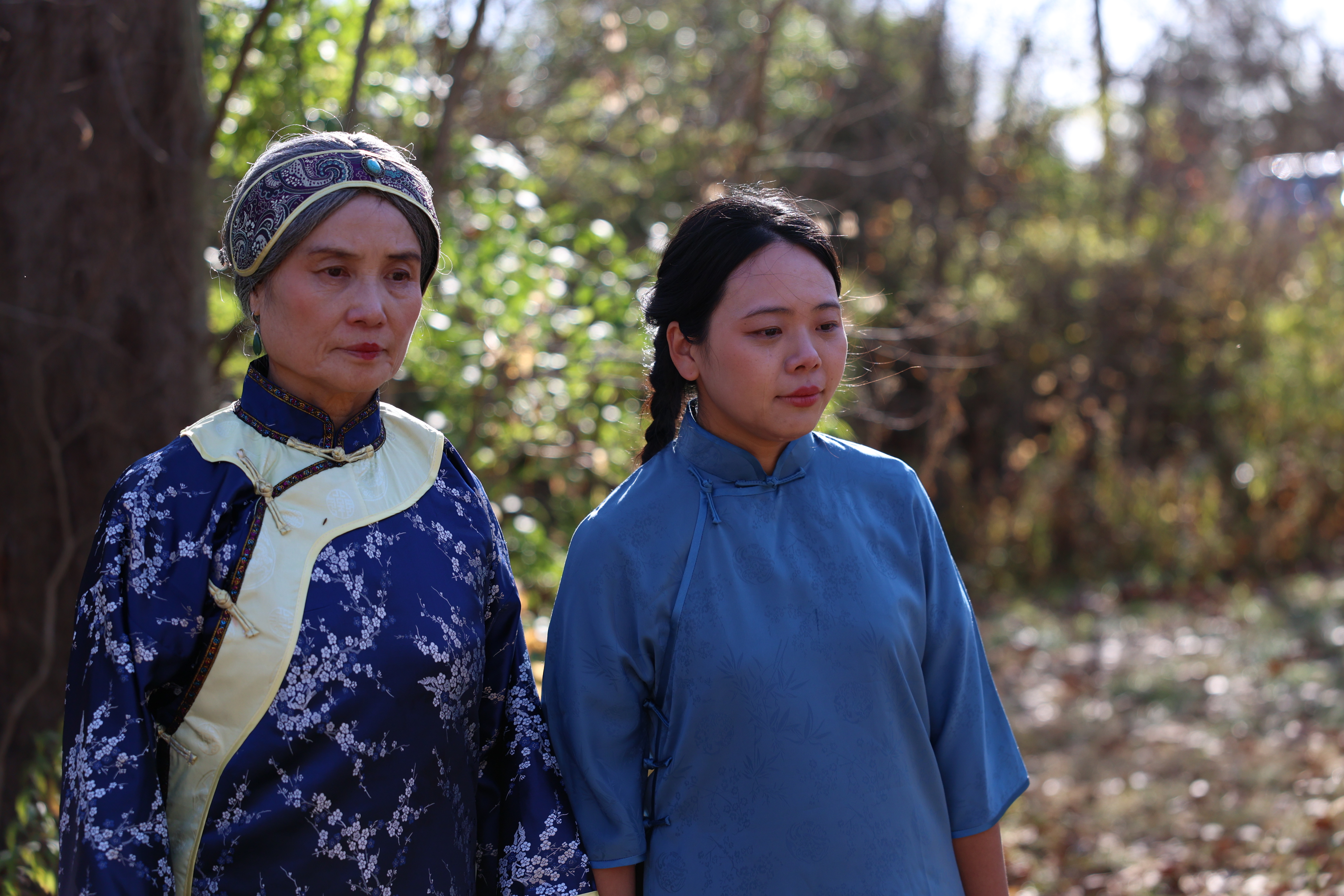
In 1920’s America, a brilliant Chinese scientist, haunted by the tragic loss of her family and the weight of expectations, must choose between securing a prestigious academic future or returning to a war-torn homeland to uplift the next generation.


Specifications
Year of production
Genre
Duration
Location
Language
Format
Ratio
Budget



key cast

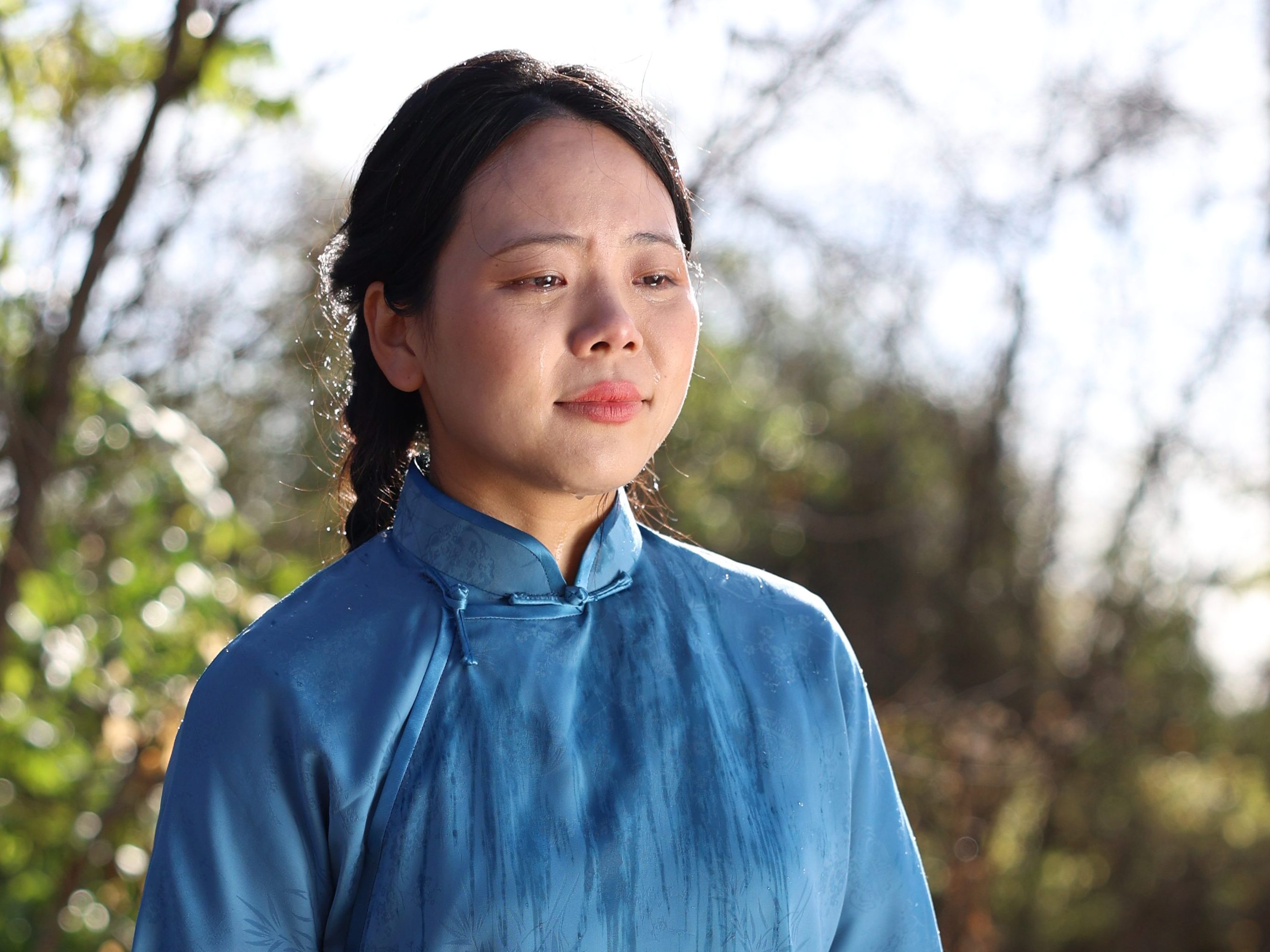
Yebei (Bella) Zhang
Wu Yi-Fang
More
Understand filmmaking, engage with filmmaking, respect filmmaking.

Siyi (Bella) Chen
Liu Gien-Tsiu
More
Currently a biomedical engineering Phd student at UM. Her research area focuses on tumor-stromal interactions. Some of her hobbies include playing tennis, watching movies, movies, and cooking!
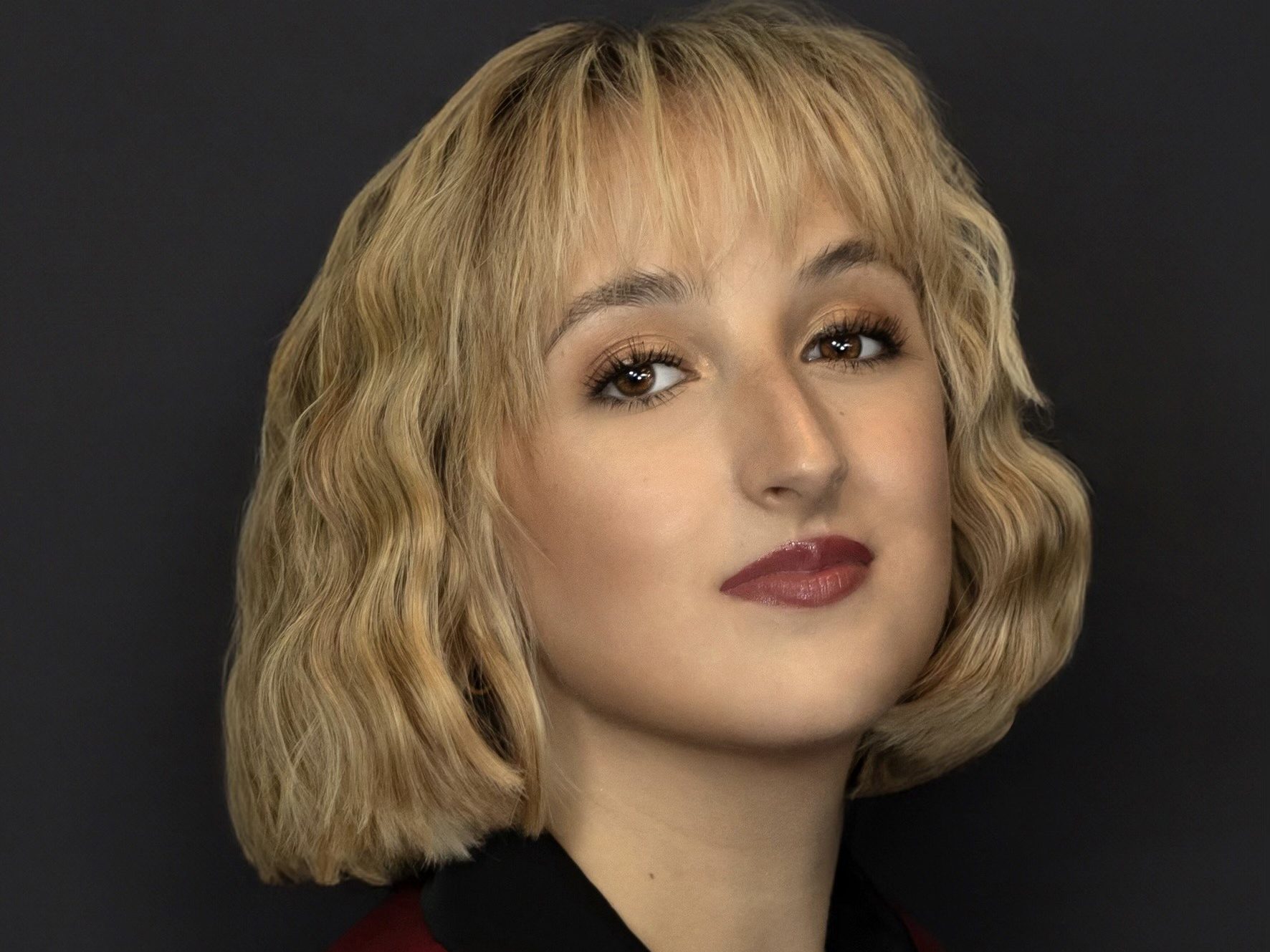
Molly Cesanek
Grace Edmunds
More
An actor and artist whose diverse talents have shaped her work both on screen and stage, which are known for their emotional depth and authenticity.

Chao (Catherine) Tang
Shi-Jing “Lucy” Wang
More
Currently a majoring in Earth and Environmental Sciences. Swallows marks her acting debut. Catherine joined the film because she found deep inspiration in this project, seeing it as closely connected to her own experiences and community. She believes in its meaningful message and was eager to contribute.

Madeline Nolen
Helen Fischer
More
Currently a senior at the UM studying Drama and Romance Languages. They have recently appeared in productions of As You Like It as Rosalind (Shakespeare in the Arb) and Julius Caesar as Octavius (UPROD). They are currently directing their senior thesis through RC Drama— Epiphany, or What Would You?
“Through this film, we aim to honor Wu’s strength while fostering cultural representation and creating space for reflection and connection among Chinese and Chinese-American students.“
– Production team
meet the Team

Tianyi Zhai
Writer/Director
Read Bio
Tianyi Zhai is a senior honors student double-majoring in Film, Television, and Media (FTVM) and Psychology at the University of Michigan. She has written, directed, and produced multiple short films and TV programs during her time at U-M. Her unique touch in eliciting the profound emotional details of true stories ensures they deeply resonate with her audience.

Alexander Marshall
Producer
Read Bio
Alexander Marshall is a junior honors student and Hopwood Award Winner at the University of Michigan, majoring in Film, Television, and Media (FTVM) and History, minoring in Creative Writing. He has worked in various capacities as an assistant director and editor for student films, including “Saved,” “The Modern Farmer,” and “Life of a Foreign Student: Interview with Vanessa Soares Da Silva during the COVID Pandemic.”

Phoebe harris
Production Designer
Read Bio
Phoebe Harris is a sophomore at the Stamps School of Art & Design, pursuing a minor in Costume Design. She has worked on art and costumes for several U-M student films, including “Who Made You This Way” and “Rawhide.” Before that, she designed costumes for her high school theater department.
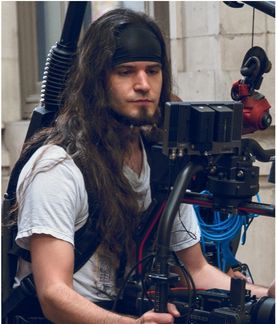
Johannes pardi
Director of Photography
Read Bio
Johannes is a Student Emmy Award-winning cinematographer and first-generation Estonian American. Starting with Lego animations at age 5, he has gone on to produce content for brands like Ford and the Detroit Pistons. His work has been screened at Slamdance and other notable film festivals. Exploring and sharing stories is his mission.
About Tianyi Zhai
Director Statement
The idea of “Swallows Under Eaves” came from an article my mom sent me when I was a freshman. It was an article about Chinese Barbour Scholars here at the U of M a hundred years ago. I was so impressed by how they all became outstanding female leaders in their respective fields. I was also surprised and thankful that this Barbour scholarship that supports Asian women to study at the U of M exists. So two years after that, I was brainstorming what story I should tell for my honors thesis—if I were to do it. In my time in Michigan, I focused on creating women’s stories. My work dealt with sexual assault, tokophobia, and single motherhood, which are all quite universal to all women. This time, I wanted to do something about my very own group: Chinese women. Out of a sudden, that article about Barbour Scholars just popped into my head and I immediately knew “This is it.”
So then I started learning more about the Barbour Scholars, like how was the historical context for them? What did they study? What did they do after graduating from U of M? And Yi-Fang’s profile stood out to me. She was the first female college president in China and later a diplomat who became one of the first four women to sign on a United Nations charter. She lived a legendary life. Then I started to research more on Yi-Fang and found out her tragic childhood in a biography. It was one of the most tragic stories I’ve ever read. All her family, other than her grandma and younger sister, died within a month, following her father’s suicide. Then I started having these questions. How did she make it? What motivated her to keep going? If I were her, I would have called myself brave if I didn’t commit suicide. So at that time, I was firm that I would make a story about Yi-Fang, about her time in Michigan, and how that tragic history shaped her as a person.
And here comes “Swallows Under Eaves,” a historical drama about how Wu Yi-Fang, a Chinese female student at U of M in the 1920s, changed her mind from pursuing a professorship in the U.S. to engaging in women’s education back in China. In the screenwriting process, I figured out that it was the shame of her family tragedy that has been the burden AND the motivation for Yi-Fang to study hard and rebuild the family reputation. Eventually, she finds herself and what she wants to do instead of what she expects her family wants her to do. In a similar way, after my father passed away in a car accident when I was eleven, I have carried the burden of honoring his name with my achievements. In Chinese culture, if your father passes away, it means, quoting an old proverb here, that the sky has fallen for your family. Even years after my father’s death, when my classmates or friends asked me where my father was, I always said, “he was on a business trip” because I was ashamed to admit that I didn’t have a dad. It wasn’t until recent years that I reconciled with this shame and burden and accepted the impacts, positive and negative, that my father’s death has brought me. It was not because I didn’t love him, I loved him so much, it was just the weird shame culture that has been rooted in my mind. In the film, I made Yi-Fang say, that although our feet are no longer bound, we are still bound. I think deep down, in my subconsciousness, I wasn’t even aware that this was the first and foremost reason why I resonated with Yi-Fang’s past and chose to do a story about her among all the other ladies.
Another layer where I connect with Yi-Fang is that we are both Chinese international students here in Michigan, United States. The challenges we face, to name a few: the language barrier, the discrimination, subtle or on your nose, and the documents we have to go through to remind us we don’t belong here. These are what we live and breathe every day. However, I don’t see the experience of Chinese international students being talked about a lot in the media, which is really weird, because it’s a significant pipeline for Chinese immigration to the U.S., at least nowadays. So through this film, I also simply want to represent our group, which has long existed in U.S. history but has rarely been talked about. Fun fact: I recently found out that my distant relative, Rong Hong, was the very first Chinese international student in the U.S. He went to Yale in 1850. It was 175 years ago. It’s kinda crazy to think about it. So, through “Swallows Under Eaves,” I don’t intend to praise how awesome we Chinese students are but simply represent us as humans who have spirits and souls. Ultimately, we ARE the swallows temporarily living under the eaves, lodged under someone else’s roof.
Director Bio
Tianyi Zhai began her journey in theatrical directing at the age of 14 with In the Youth, a musical exploring how different family backgrounds impact adolescent growth. The production was well received by Beijing’s parent community and led to her acceptance into the prestigious “Dao Yuan” Gifted Program at Beijing No. 4 High School, one of the best high schools in China, where she specialized in theatre, film, and television directing. At 16, Zhai wrote, directed, and produced her second original musical, The No. 7 Experimental Class, a reflective piece on her time in the “Dao Yuan” program and the Chinese education system. It premiered at Beijing Yuyu Theatre and toured multiple high schools across Beijing. As her third original musical, 4 Love, prepared for its international debut at the Edinburgh International Festival, the outbreak of COVID-19 in China brought live theatre to a halt. This turning point led Zhai to reevaluate her path and shift her creative focus to filmmaking.
In 2021, supported by the Katherine Ling Scholarship, the Chinese Student Scholarship, and the Chinese Alumni Association Scholarship, Zhai enrolled at the University of Michigan, where she is double majoring in Film, Television, and Media (FTVM) and Psychology. She has maintained a 4.0 GPA and has received numerous academic honors, including College of LSA Honors, designation as a James B. Angell Scholar, University Honors, the William J. Branstrom Freshman Prize, the Nancy Waters & Mark Waters Scholarship, and First Place in the 2024 Michigan Association of Broadcasters Foundation Scholarship.
During her time at Michigan, Zhai has written, directed, and produced six original short films and two TV pilots. She founded and led the first and largest cross-cultural film production club, Cinnamon Cinema, in University of Michigan history. She also launched the inaugural Ann Arbor Chinese Film Festival, sponsored by the Department of Film, Television, and Media and the Office of Multi-Ethnic Student Affairs. Expanding into television broadcasting, Zhai served as the Sports Channel Director and later as the 30th President and General Manager of WOLV-TV, the university’s official student-run television station. There, she produced one sports program, one entertainment show, and the flagship show “WOLV-TV Spotlight.” In the professional realm, she has worked in development with Paris Films and The Wolper Organization at the Warner Bros.
Producer Statement
“Her story is one of perseverance and courage—qualities that continue to inspire us in the face of our own challenges.”
When Director Tianyi Zhai approached me to produce this project, I was immediately captivated by the story of Wu Yi-Fang, a woman whose resilience and intellect shaped the course of Chinese history. As a filmmaker, I am drawn to stories that illuminate overlooked historical narratives with emotional depth and contemporary resonance. Having previously collaborated with Tianyi on an earlier film of hers, Saved, I knew firsthand her ability to craft deeply moving and visually compelling narratives. Our shared commitment to bringing historically rich and character-driven stories to life made this project a natural fit.
As a Junior Honors student at the University of Michigan, majoring in Film, Television, and Media, as well as History, my academic background fuels my passion for uncovering the past through the lens of cinema. Producing Swallows Under Eaves has been an opportunity to merge my love for storytelling with historical research, ensuring that Wu Yi-Fang’s journey is portrayed with the authenticity and reverence it deserves.
.
With a talented team of dedicated artists and filmmakers, we’ve strived and fought and toiled to create a film that not only honors Wu Yi-Fang’s legacy but also resonates with audiences today. Her story is one of perseverance and courage—qualities that continue to inspire us in the face of our own challenges. Bringing this film to life has been both an artistic and personal journey. To have been given the opportunity to assemble and work with a team – a family – of talented and passionate individuals who share the belief that stories like these must be told, not just to honor the past but to inspire the present, is the greatest blessing I could ask for.
I am honored to have helped bring this vision to life.
Alexander Marshall, Producer
WU Yi-Fang
Wu Yi-Fang is a calm, ambitious, and determined individual, shaped by the tragic loss of her family. Once an extroverted child, she became more reserved, yet she remained courageous and righteous. Carrying the burden of making a name for her family, she is the most hardworking as one can imagine. Intelligent but not nerdy, she later inspires those around her with her strong sense of responsibility and unwavering dedication to education and societal improvement.
-

Wu Yifang signing the United Nations Charter, Herbst Theatre, San Francisco, California, 26 Jun 1945 (public domain, Republic of China Ministry of the National Defense)
Brief bio
b. Jan. 26, 1893
d. Nov. 10, 1985
Wu Yi-Fang was one of the most influential Chinese women of the 20th century. In 1920, she was recommended to study at the University of Michigan under the Barbour Scholarship. After receiving a Ph.D. in Zoology, she came back to China to pursue her women’s education dream. As President of Ginling College, a leading women’s institution, from 1928 to 1951, she guided the school through turbulent war times, nurturing a generation of female leaders and advancing women’s education in China. Beyond her contributions to education, Yi-Fang was active in politics and diplomacy, serving as a non-party representative. Notably, she attended the United Nations Conference on International Organization (UNCIO) in San Francisco in 1945, becoming the first woman to sign the UN Charter. Her remarkable life continues to inspire young minds today.
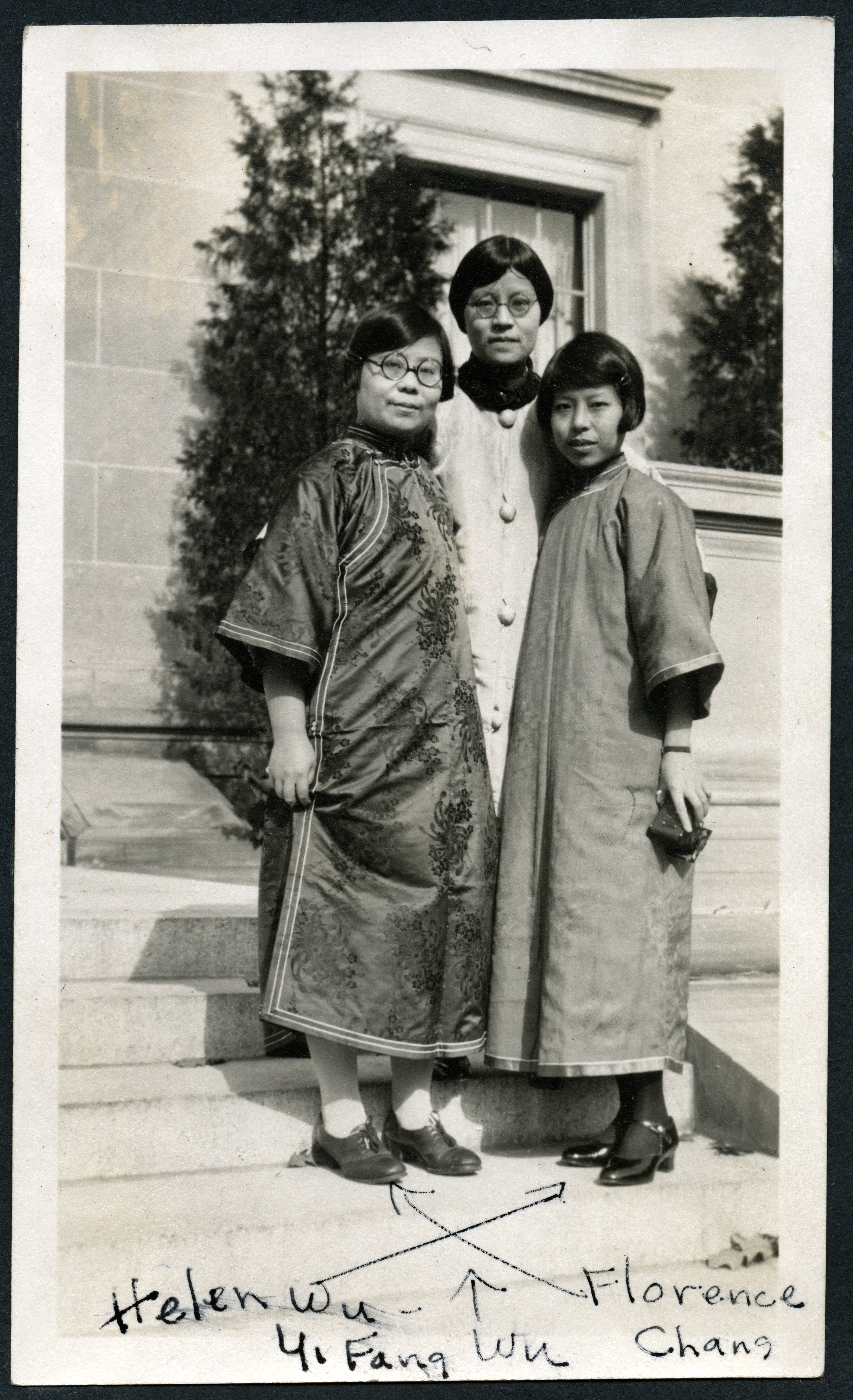
Wu Yifang (center) with two classmates at the University of Michigan. A. Grace Edmonds scrapbooks, Bentley Historical Library, University of Michigan.

楊家駱. – 《民國名人圖鑑》 民國史稿草創本副刊之一 辭典館,民國26年(1937)


W. Carl Rufus, “Twenty-Five Years of the Barbour Scholarships,” Michigan Alumnus Quarterly Review, Vol. XLIX, No. 11 (December 19, 1942), Bentley Historical Library, University of Michigan.
FAQ
q: What inspired us to make a film about Wu Yi-Fang?
Tianyi Zhai, a dedicated Chinese filmmaker, was inspired to tell Wu Yi-Fang’s story after discovering her legacy as a Barbour Scholar at the University of Michigan. What moved Zhai and the team the most was not Wu’s titles, but her resilience—overcoming profound personal loss at a young age to become a pioneer in women’s education. Through this film, we aim to honor Wu’s strength while fostering cultural representation and creating space for reflection and connection among Chinese and Chinese-American students.
Q: What historical details were the hardest for us to get right?
Maintaining historical continuity was the hardest detail to get right, by nature of portraying events that happened a century ago. Having to be mindful of any cars that could pass through our shots, people dressed in a modern style that didn’t exist in the 1920s, and conducting our set dressing to make our rooms look accurate presented our team with some extremely difficult challenges, not to mention needing to ship in historically accurate clothing for our actors and actresses from China directly.
Q: Did we consult historians or Wu Yi-Fang’s family?
Technically. We were not able to reach out to anyone from Yi-Fang’s family, but we were able to conduct extensive primary source research at both Nanjing Normal University (Yi-Fang’s Alma Mater) in China and the Bentley Historical Library at the University of Michigan through their collection on the Barbour Scholars of 1921-1930.
Q: Did we use any actual letters, speeches, or documents to shape the performances?
We didn’t have any information from letters, speeches, or documents that we copied verbatim, but through our historical research in both China and the Bentley Historical Library at the University of Michigan, all of the material used in any actual letters, speeches, or documents (as well as a student scrapbook) were 100% accurate to Yi-Fang’s life.
Q: What message do we hope audiences take from the film?
We hope audiences see that while the past can shape us, it doesn’t have to define us. Wu Yi-Fang’s story is a testament to quiet resilience—how one can endure deep personal loss and still choose to move forward with purpose. The film invites viewers to reflect on how we carry the weight of our histories, and how, sometimes, the most courageous act is learning to let go of the past in order to build something new. For those navigating the weight of personal or inherited burdens—especially within diasporic or cultural contexts—Swallows Under Eaves encourages reflection, healing, and the strength to continue with intention. Through this story, Tianyi Zhai also hopes to connect students from similar backgrounds with Wu Yi-Fang’s journey and accomplishments, reinforcing the importance of representation in film and media and the value of seeing oneself in the stories we tell.
Q: Why do we think Wu Yi-Fang’s story is still relevant today?
Wu Yi-Fang’s story speaks to resilience, purpose, and the strength to rise above personal and societal burdens—messages that remain deeply relevant today. Her journey resonates with those navigating cultural identity, inherited expectations, and underrepresentation. By turning personal tragedy into a lifetime of service, she offers a powerful example of how quiet strength can lead to lasting impact, especially for young people seeking meaning and representation in their own paths.

Proudly powered by WordPress